Most businesses don't have a social media problem — they have a social media strategy problem. They're posting consistently, sometimes even posting well, and still not seeing it connect to anything the business actually cares about. Here's how to fix that without just posting more often.
Start with a job, not a content calendar
Before deciding what to post, decide what social is actually for at your business. That's usually one of three jobs, rarely all three at once:
- Building brand awareness with people who don't know you yet
- Deepening trust with an audience that already knows you, to move them toward a purchase
- Supporting existing customers and turning them into repeat buyers or referrals
A single account trying to do all three at once with the same content usually does none of them well. Get clear on the primary job first — the content decisions get much easier after that.
Consistency beats frequency
Posting five times a week inconsistently for two months, then going quiet for six weeks, does more damage than posting twice a week reliably, forever. Platforms and audiences both reward accounts that show up predictably. If you can only sustainably manage two high-quality posts a week, that beats five mediocre ones that stop the moment things get busy internally.
The strategy most businesses skip
A social strategy that actually works usually has four visible parts:
1. A real content pillar system
Three to five recurring themes (not just “whatever comes to mind”) that map back to what your audience actually cares about — not just what's easy to photograph.
2. A content calendar built around those pillars
Planned at least a few weeks out, so content quality doesn't degrade into whatever can be produced same-day under deadline pressure.
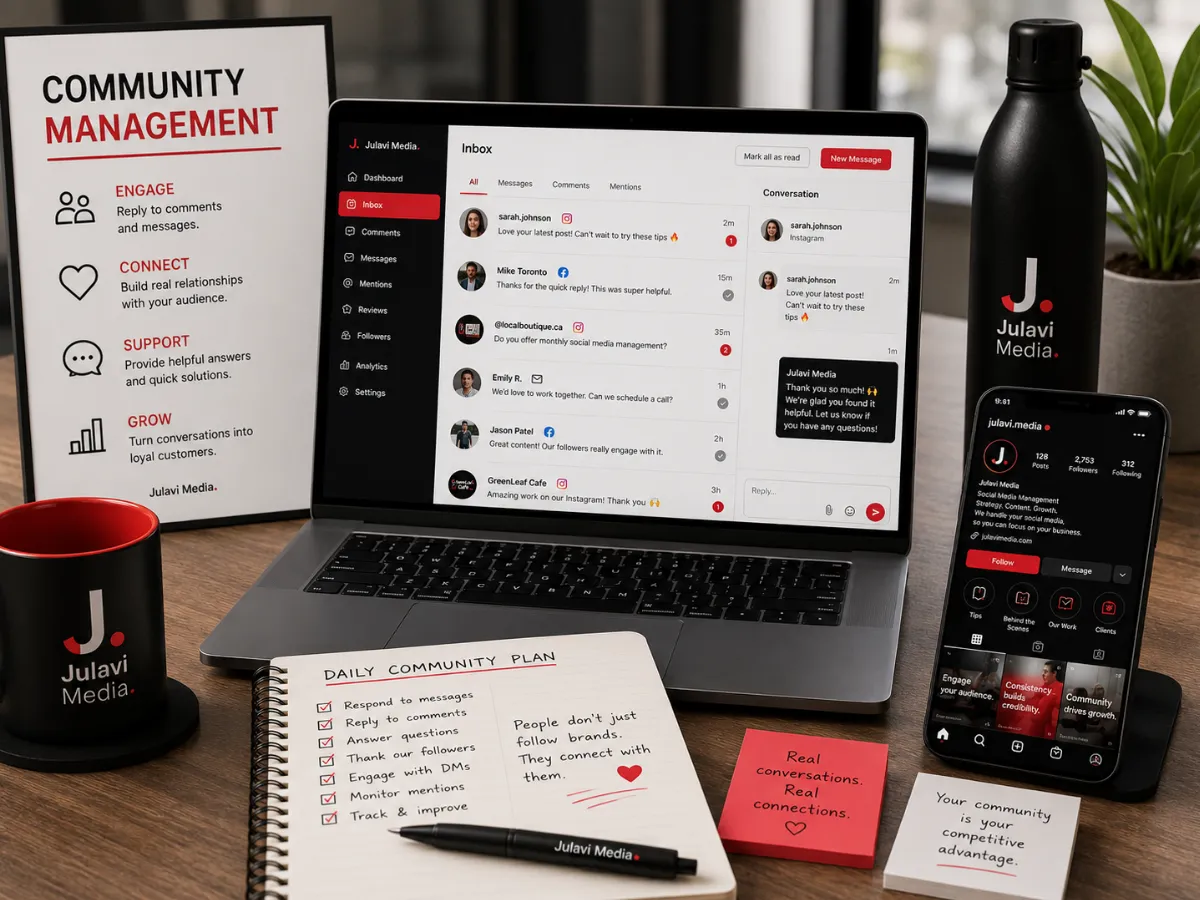
3. Community management as a real function, not an afterthought
Comments and DMs are where a meaningful share of actual conversions happen on social — and they're the first thing to get neglected when a business is busy. An unanswered comment or a slow DM response is a cost, even if it's invisible on a dashboard.
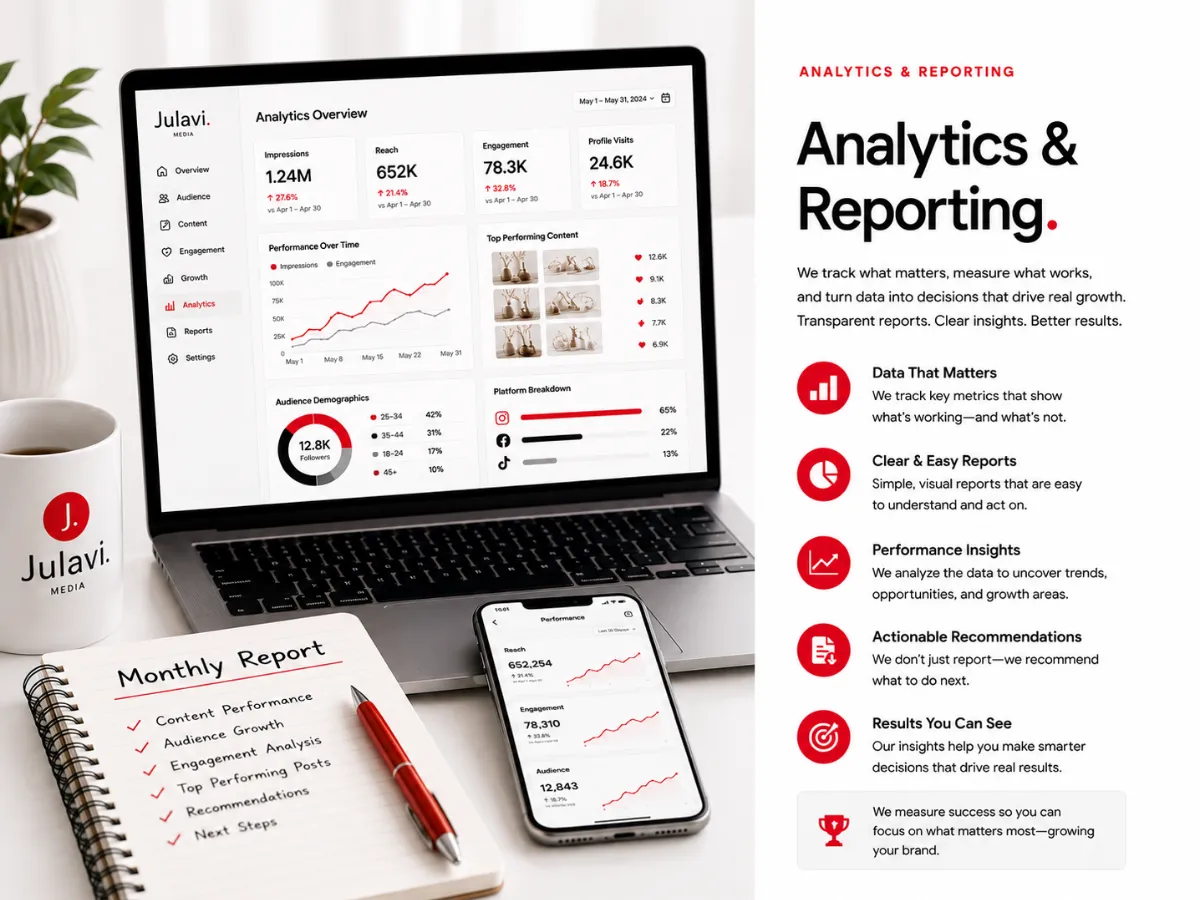
4. A feedback loop from analytics back into content decisions
Which posts actually drove profile visits, saves, or link clicks — not just likes. Vanity metrics feel good and tell you almost nothing about business impact.
The businesses getting real value from social aren't the ones posting the most — they're the ones who decided what job social is doing for them, and built everything else around that answer.
Where to start if this feels overwhelming
Pick one platform, one primary job, and three content pillars. Run that for eight weeks with someone actually reading and responding to comments. That's a stronger foundation than a five-platform, twenty-post-a-month plan that burns out in three weeks.